

Trans people and gender-diverse populations face some of the highest risks of acquiring HIV.[1] The community encounters multiple, overlapping challenges. Beyond limited access to health services, they are also frequent targets of stigma and discrimination, whether stemming from social attitudes, legal frameworks, state policies, or even the public health system itself.
Another equally critical issue is the frequent separation of HIV testing and gender-affirming hormone therapy services. This separation creates a difficult crossroads for transgender people, forcing them to choose between the two. Furthermore, comprehensive one-stop service centers remain uncommon across much of Asia, despite the existence of long-established and successful models such as the Fenway Health Model in the United States.[2]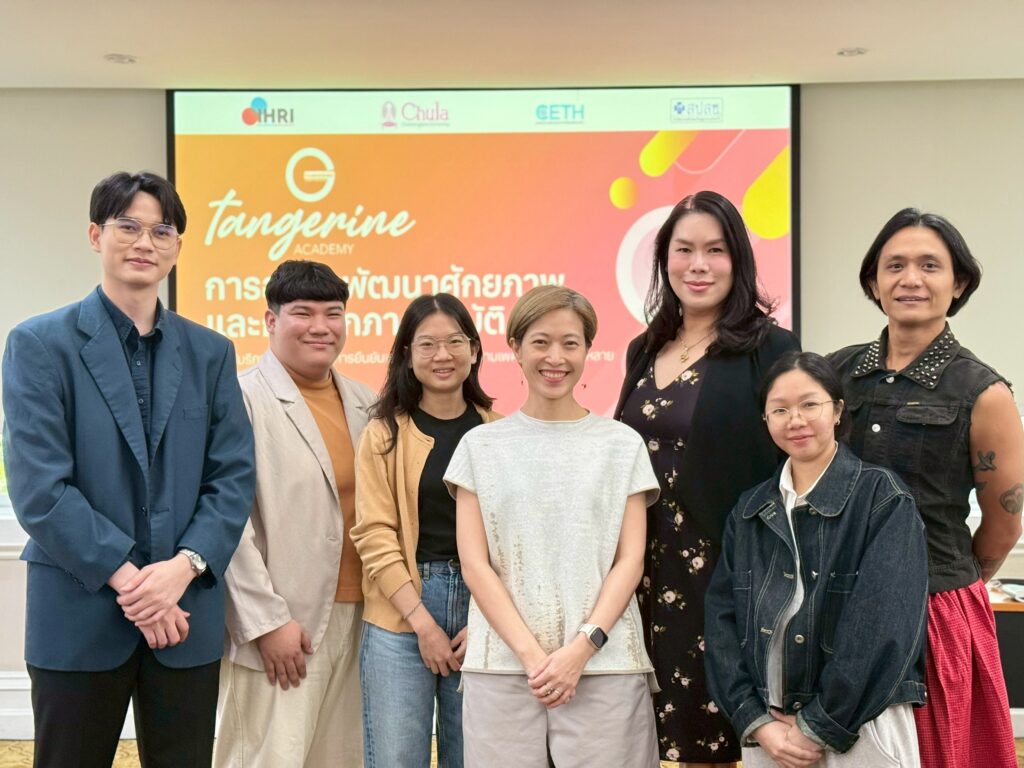
The Tangerine Model
In 2015, the Institute of HIV Research and Innovation (IHRI) established the Tangerine community health clinic, the first one-stop trans-led health clinic in Asia. Tangerine provides integrated services, including counseling, testing, and treatment for HIV and other sexually transmitted infections, PEP, PrEP, gender affirming hormone treatment, neovagina care, and mental health care. The clinic is led by trained trans personnel, enabling strong and meaningful connections with the communities it serves. Between 2015 and 2025, Tangerine has provided services to more than 6,000 transgender women, with the number of service users steadily increasing in subsequent years. This is the Tangerine Model—an approach that places the community at the very heart of service delivery and entrusts healthcare to the people who own and shape it.[3]
IHRI envisions the establishment of integrated and stigma-free health service centers as a key objective in improving access to necessary care for trans and gender-diverse people. To ensure effective service delivery for key populations, it is essential to strengthen the capacity of health centers to provide quality care. Central to this effort are healthcare providers with a holistic understanding of trans people’s physical, mental, and social well-being. They are not only the driving force behind advocacy but also the frontline personnel who directly engage with clients and shape their care experience.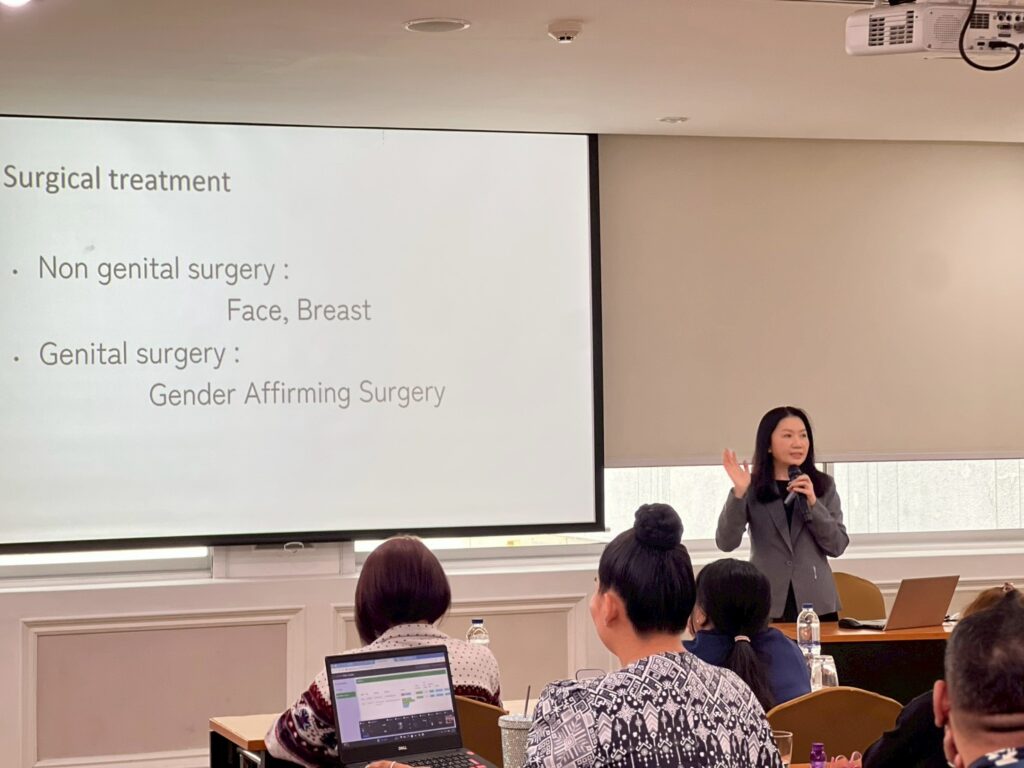
The Tangerine Academy
The Tangerine Academy for Transgender Health is a capacity-building training program designed to prepare participants to provide gender-affirming hormone and other integrated services. The program aims to strengthen medical knowledge related to trans health, as well as understanding of rights, service systems, and reimbursement mechanisms under the National Health Security Office (NHSO). It also focuses on developing participants’ practical skills by utilizing learning tools, case studies, and direct observation of service delivery, allowing them to adapt what they learn to the contexts of their own health centers.
The first training cohort was held from 2-5 February 2026 at the Mandarin Hotel Bangkok, Samyan, with 15 participants representing community health centers in Bangkok, surrounding metropolitan areas, and other provinces. These participants serve as frontline providers: the first point of contact for many service users, and act as community representatives, listeners, advisors, and referral points connecting trans and gender-diverse people to relevant services.
Over the four-day training, participants learned how to comprehensively deliver gender-affirming hormone services within community health centers. Topics ranged from understanding diversity beyond the concept of sex, through the SOGIESC framework (Sexual Orientation, Gender Identity and Expression, and Sex Characteristics), led by Rena Janamnuaysook from IHRI, to mental health and gender incongruence presented by Dr. Mayteewat Chiddaycha from King Chulalongkorn Memorial Hospital.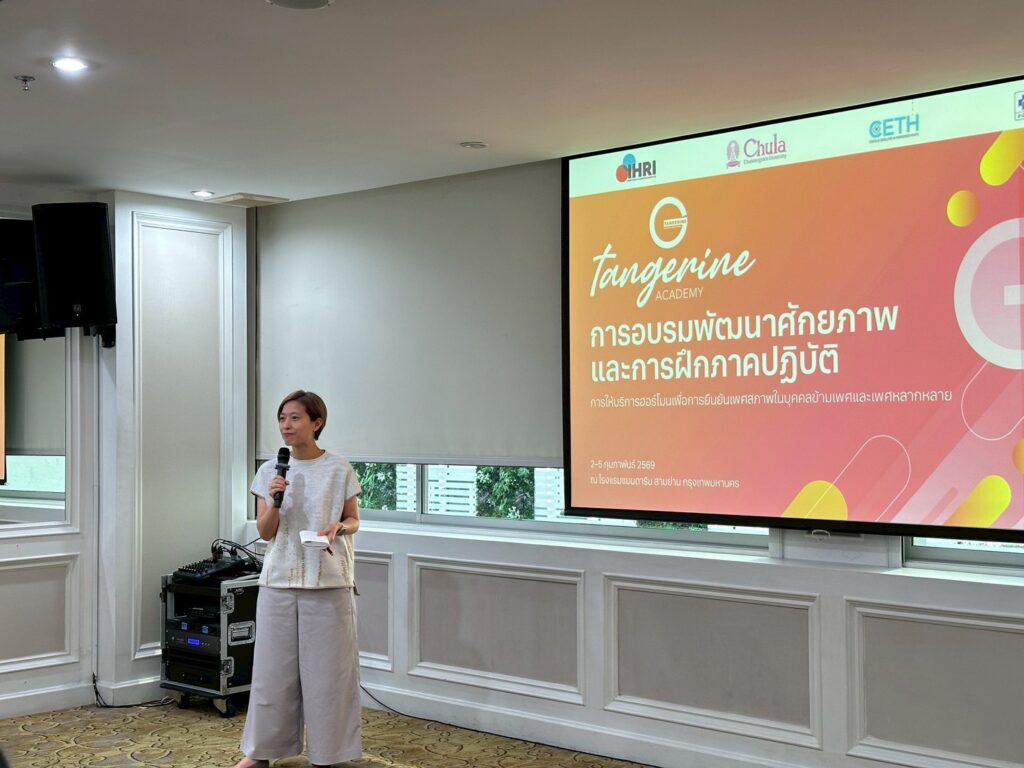
Sessions on the provision of gender-affirming hormones for trans and gender-diverse adults were delivered by Dr. Sirin Tangcharoensathien from IHRI, while services for trans children and adolescents were presented by Dr. Nadvadee Aungkawattanapong from King Chulalongkorn Memorial Hospital. The program also included the use of counseling and assessment tools for gender-affirming hormone therapy, co-presented by Dr. Amontis Chaimongkolpipop and Kittichai Boontho, as well as gender-affirming surgery for transgender individuals, presented by Assistant Professor Dr. Poonpissamai Suwajo from the Center of Excellence in Transgender Health, Chulalongkorn University.
Participants also observed service delivery at the Tangerine Clinic and took part in two practical workshops facilitated by IHRI staff: a workshop on developing counseling skills for gender-affirming hormone use through case studies and practical tools, led by Kittichai Boontho; and a workshop on communication strategies and public relations planning to improve access to hormone services, led by Krittaporn Termvanich. IHRI also plans to provide post-training support and follow-up supervision for participating organizations.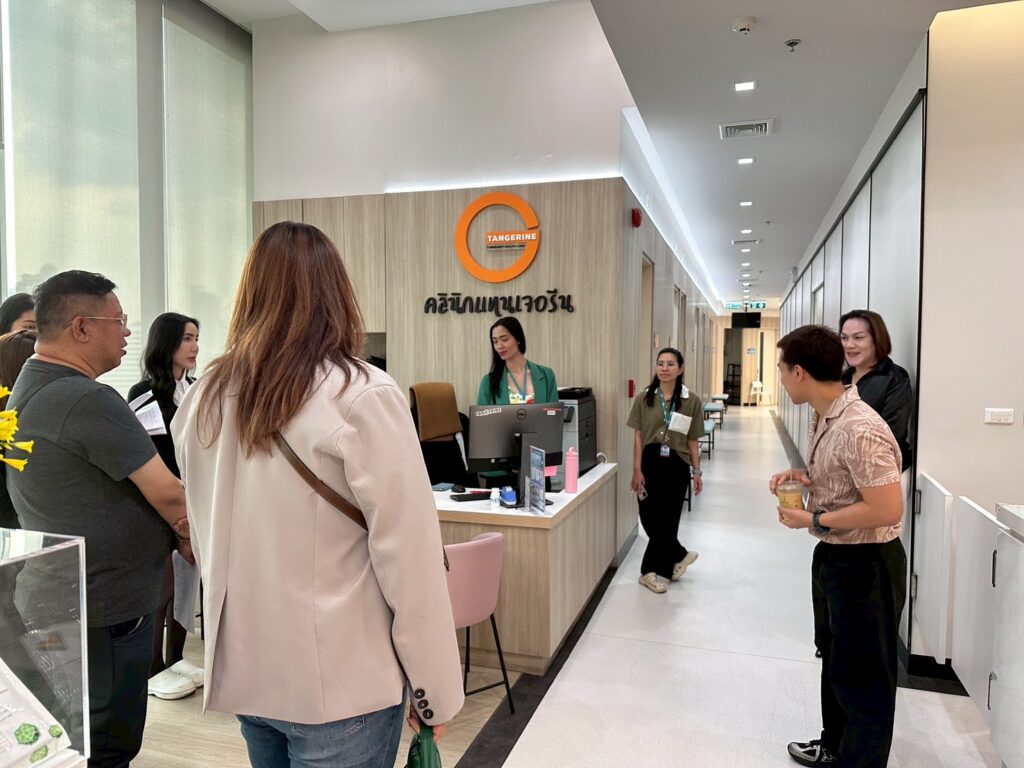
The Tangerine Momentum
A key strength of this training cohort was the participants’ prior experience working with transgender and gender-diverse people and other underserved populations. Some participants were members of the transgender community, while others worked closely with those facing barriers to access, such as youth in suburban or rural areas. Hence, participants not only gained more practical knowledge for future work but also contributed as experienced practitioners, sharing insights with one another and with IHRI to further refine the training curriculum. This environment created a space where co-learning could thrive, reflecting the very essence of Tangerine Clinic itself.
“I’ve been working in a community-based organization for almost a year now, and I’m still very new to gender-affirming hormones. My knowledge was basically zero. Beyond learning from the lecturers, the most important thing was learning from everyone here. Hearing the questions and discussions raised by other participants helped address things I’d been wondering about but didn’t dare ask, because I hadn’t experienced them myself. They have direct experience,” said Pete, Social Media Field Officer, MPLUS Bangkok”
In 2026, the Tangerine Academy for Transgender Health plans to expand our cohorts to other Asian countries, including Cambodia, Laos, Vietnam, the Philippines, Kazakhstan, Malaysia, Japan, and Taiwan. The next cohort will be held in Bangkok from 16-19 March 2026 for medical doctors, nurses, psychologists, and multidisciplinary teams, continuing efforts to strengthen the capacity of Thai providers to serve trans and gender-diverse communities.
The Tangerine Academy for Transgender-Competent HIV Care project is supported by Gilead Sciences.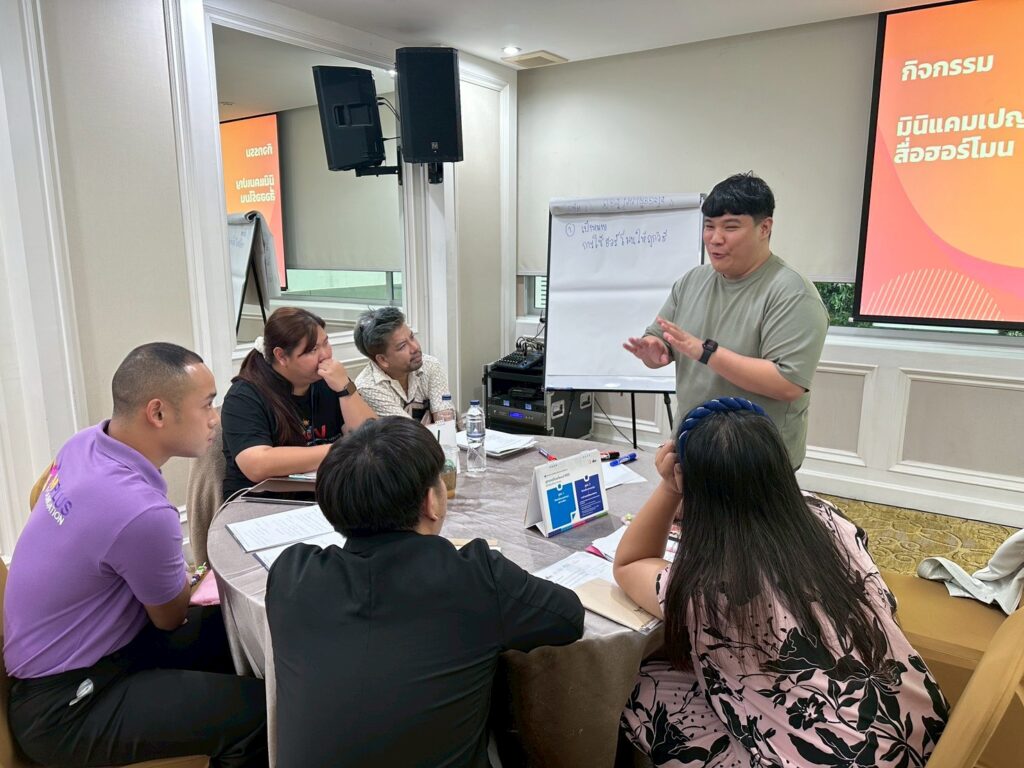
[1] Stutterheim SE, van Dijk M, Wang H, Jonas KJ (2021) The worldwide burden of HIV in transgender individuals: An updated systematic review and meta-analysis. PLoS ONE 16(12): e0260063. https://doi.org/10.1371/journal.pone.0260063
[2] Reisner SL, Bradford J, Hopwood R, Gonzalez A, Makadon H, Todisco D, et al. Comprehensive transgender healthcare: the gender affirming clinical and public health model of Fenway health. J Urban Health. 2015;92(3):584–92.

